


Table of Contents
The Science of Sciatic Nerve Health: Chiropractic and Integrative Approaches
Introduction
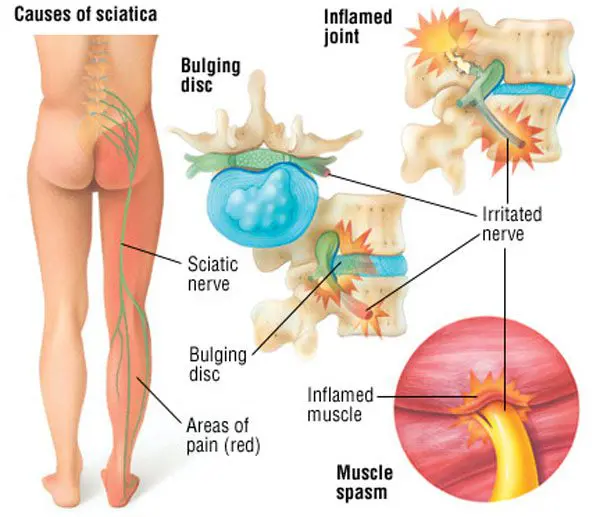
The sciatic nerve is the largest nerve in the human body, responsible for transmitting signals between the spine, hips, legs, and feet. Its size and function make it essential for mobility, yet also vulnerable to compression and irritation. When this occurs, patients often experience sciatica—a painful and sometimes disabling condition.
At Chiropractic Scientist, our mission is to connect clinical experience with evidence-based insights. This article explains the biomechanics of the sciatic nerve, the structural reasons why it becomes irritated, and how chiropractic adjustments, spinal decompression, massage, nutrition, and integrative care can support long-term nerve health.
Anatomy and Biomechanics of the Sciatic Nerve
The sciatic nerve originates from the lumbar and sacral nerve roots (L4–S3), merging to form a single thick nerve that travels through the pelvis, gluteal region, and down the legs?Spine-Health†source?.
Structurally, nerves are made of axons—long fibers of neurons—that are supported by connective tissue layers:
- Endoneurium: Wraps individual axons.
- Perineurium: Bundles axons into fascicles.
- Epineurium: Protects the nerve as a whole?Cleveland Clinic†source?.
Biomechanically, the sciatic nerve must glide smoothly during movement. Restricted motion in the lumbar spine or pelvis increases tensile stress on the nerve, making it more prone to compression injuries?ScienceDirect†source?.
Causes of Sciatic Nerve Compression
From a scientific perspective, sciatica arises when mechanical or inflammatory stress affects the nerve or its roots:
- A disc herniation displaces the nucleus pulposus material against the nerve roots.
- Spinal stenosis narrows the canal and compresses nerve fibers.
- Piriformis muscle entrapment restricts nerve gliding.
- Trauma and repetitive strain create scar tissue and altered biomechanics.
Studies show that unresolved compression leads to structural and functional changes in axons, increasing the risk of neuropathic pain?Medscape†source?.
Chiropractic Interventions: Evidence and Mechanisms
Spinal Adjustments
Chiropractic adjustments restore joint alignment and mobility, reducing mechanical stress on nerve roots. Evidence suggests adjustments improve biomechanics and decrease inflammation around compressed nerves?Alliance Orthopedics†source?.
Spinal Decompression Therapy
Decompression provides negative intradiscal pressure, promoting retraction of herniated discs and improved blood flow. Learn more about this therapy at our Spinal Decompression resource.
Outcome Measures
Patients often report reduced radicular pain, improved range of motion, and better functional scores following chiropractic care?AAI Doctors†source?.
Integrative Science-Backed Approaches
Massage Therapy
Improves circulation, reduces soft tissue adhesion, and enhances nerve mobility.
Physical Therapy
Targets biomechanical correction through strengthening and flexibility exercises, restoring load distribution across the spine.
Acupuncture
Shown in studies to reduce neuropathic pain intensity by modulating neural signaling pathways?NCCIH†source?.
Nutritional Interventions
- Vitamin B12: Promotes myelin sheath repair?RxWellness†source?.
- B-complex vitamins: Essential for neurotransmission?Asuta Health†source?.
- Alpha-lipoic acid (ALA): Reduces oxidative damage in nerve tissue?Verywell Health†source?.
These integrative modalities reinforce chiropractic results by addressing the biological needs of nerve tissue.
Dr. Alexander Jimenez: Dual-Scope Clinical Insights
Dr. Alexander Jimenez, DC, APRN, FNP-BC, integrates biomechanical analysis with functional medicine in El Paso. His dual-scope expertise provides:
- Advanced neuromusculoskeletal imaging (MRI, CT) to identify structural causes of sciatic compression.
- Chiropractic adjustments and decompression to restore alignment.
- Medical documentation for motor vehicle accidents, sports injuries, and workplace trauma.
- Integrative rehabilitation including nutrition, exercise coaching, and acupuncture?LinkedIn†source?.
This evidence-based, integrative model bridges science, clinical care, and patient empowerment.
Conclusion
The sciatic nerve is more than just a large nerve—it is a complex biomechanical structure essential to human mobility. When compromised, sciatica requires more than symptom management.
Through chiropractic adjustments, decompression therapy, integrative nutrition, and scientifically validated therapies, patients experience meaningful recovery and protection against future complications.
At Chiropractic Scientist, we emphasize evidence-based integrative care—grounded in anatomy, biomechanics, and clinical expertise. With leaders like Dr. Jimenez guiding this approach, patients benefit from a clear path to recovery that is both scientifically sound and patient-centered.
References
Alliance Orthopedics. (n.d.). Do I need a chiropractor or physical therapy for sciatica relief?
Alliance Orthopedics. (n.d.). Can chiropractic care help with sciatica?
American Association of Integrative Doctors. (n.d.). Chiropractic treatment for sciatica.
Asuta Health. (n.d.). Natural approaches to neuropathic pain relief: Evidence-based strategies for managing nerve pain.
Atlas Pain Specialists. (n.d.). Can a chiropractor help with nerve pain?
Byju’s. (n.d.). Structure of a nerve.
Cleveland Clinic. (n.d.). Nerves.
Dr. Alexander Jimenez. (n.d.). Clinical insights on chiropractic and integrative care.
Enhanced Living Chiropractic. (n.d.). How chiropractic care can help with sciatica.
E Medicine Medscape. (n.d.). Nerve cells overview.
GetWeave. (n.d.). Integrative health practices.
International Association for the Study of Pain. (2023). Integrative pain care.
National Center for Complementary and Integrative Health. (n.d.). Complementary, alternative, or integrative health: What’s in a name?
RxWellness. (n.d.). Natural therapies for nerve damage: A guide to holistic healing solutions.
ScienceDirect. (n.d.). Sciatic nerve anatomy.)
ScienceDirect. (2021). Chronic neuropathic pain, integrative modalities, and medical cannabis.
Spine-Health. (n.d.). Sciatic nerve anatomy.
Verywell Health. (2024). Supplements for neuropathy.



 Again, We Welcome You.
Comments are closed.