

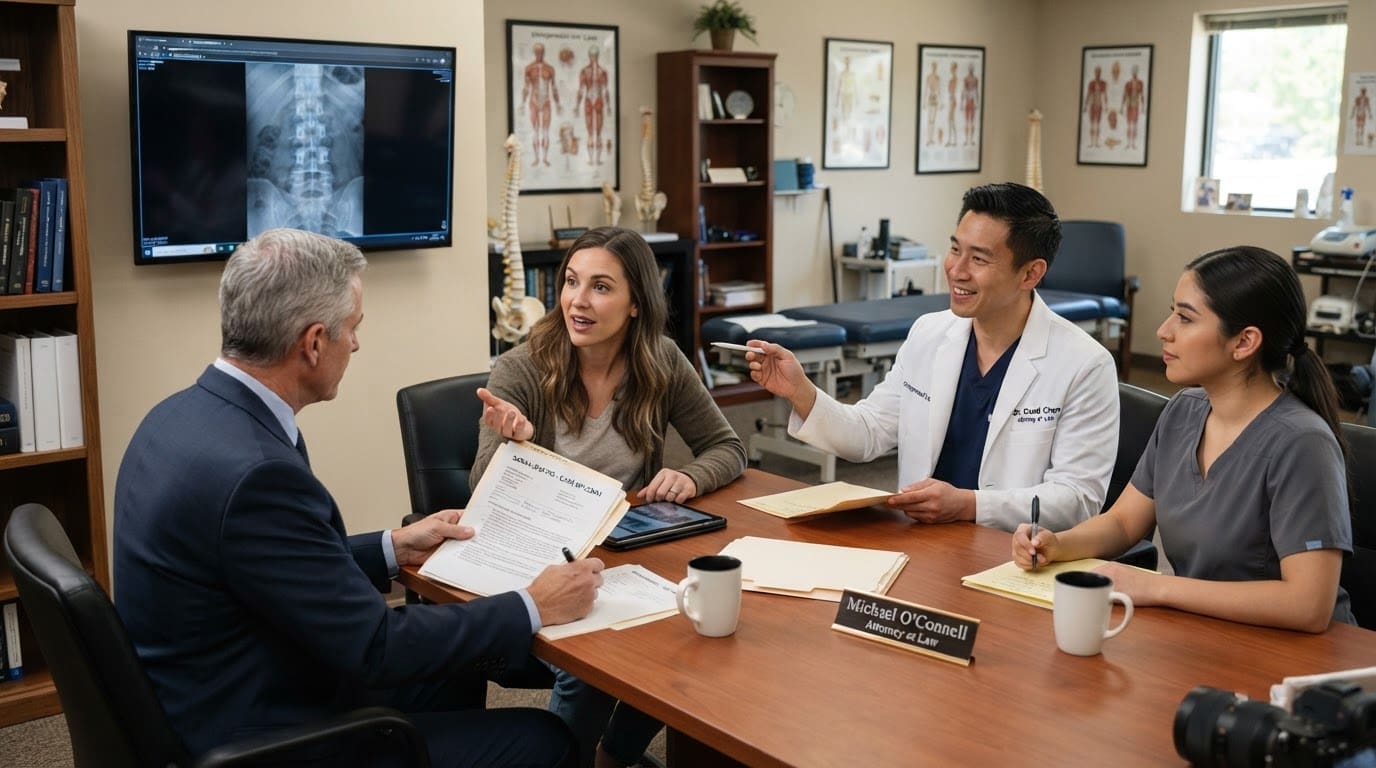
Get insights into the role of chiropractic care in personal injury and how it can lead to better health outcomes for you with causation.
Table of Contents
Abstract
This educational post guides readers through the critical concept of causation in personal injury litigation and its indispensable partnership with evidence-based chiropractic care. Written from the clinical perspective of Dr. Alexander Jimenez, DC, APRN, FNP-BC, CFMP, IFMCP, ATN, CCST, it begins with the legal foundations of actual and proximate cause, then explores the musculoskeletal and nervous system responses to trauma. Readers learn what chiropractic care is, how spinal manipulation and related techniques restore joint motion, modulate pain pathways, and interrupt the cascade that turns acute injuries into chronic pain, deconditioning, sleep disruption, and mood changes. The post explains how detailed clinical documentation of the mechanism of injury, temporal relationships, objective findings, and functional progress provides strong support for personal injury claims. Throughout, it highlights the multidisciplinary model at Injury Medical Clinic PA (also known as Mission Plaza Injury Medical Clinic) in El Paso, Texas, where Dr. Jimenez integrates chiropractic and advanced-practice nursing care under the medical direction and collaborative oversight of Dr. Maria Guadalupe Cardenas, MD (Board Certified in Internal Medicine; NPI #1164426749, Texas MD License #J2933), who brings more than 40 years of experience as an internist. The narrative weaves in findings from leading researchers on neuroplasticity, biomarkers, clinical practice guidelines, and safety data, presenting an accessible journey that prioritizes clear understanding of non-surgical recovery pathways.
Introduction Beginning the Journey Toward Understanding Causation and Recovery
Imagine an ordinary day that changes in an instant. A rear-end collision on a busy El Paso street, a slip on a wet floor at work, or an unexpected impact during sports sends forces through the body that soft tissues and spinal joints were never designed to absorb at that speed or angle. Hours or days later, stiffness appears, range of motion decreases, and pain begins to limit ordinary activities such as turning the head while driving, lifting a child, or sitting through a workday. At that moment, two parallel needs arise. The body requires skilled care to restore motion, calm protective muscle responses, and support natural tissue healing. At the same time,e the legal or insurance process requires clear evidence that the incident caused or substantially contributed to the resulting condition. That dual need sits at the heart of causation in personal injury work, and it is why integrative chiropractic care holds a central place in non-surgical recovery.
I am Dr. Alexander Jimenez. For more than three decades, es I have practiced in El Paso as both a Doctor of Chiropractic and a board-certified Family Nurse Practitioner. My dual training lets me evaluate biomechanical disruption and systemic responses at the same time. At Injury Medical Clinic PA (also known as Mission Plaza Injury Medical Clinic), I work alongside Dr. Maria Guadalupe Cardenas, MD. Dr. Cardenas is board-certified in Internal Medicine, holds NPI #1164426749 and Texas MD License #J2933, and brings more than 40 years of clinical experience as an internist. She serves as Medical Director and Collaborative Physician. This arrangement is typical of strong integrative injury clinics: the chiropractor delivers precise hands-on care and functional assessment while the internist provides medical oversight for complex presentations, medication considerations, or coexisting conditions. Together with rehabilitation specialists and functional medicine support, the team creates plans that address the injury itself and the wider physiological consequences that can follow.
In the sections that follow, we will explain what causation means for attorneys, how chiropractic care works at the level of joints, muscles, nerves, and the brain, why these approaches reduce both the primary musculoskeletal injury and related comorbidities, and how the resulting clinical record provides meaningful insight for personal injury matters. The language is deliberately straightforward so that attorneys, patients, families, and colleagues can follow the reasoning without specialized jargon standing in the way. Key terms appear in bold the first time they are emphasized and whenever they carry particular clinical or legal weight.
Why Causation Is Important and Required in the Courtroom for Injuries
Causation is the indispensable link between an alleged negligent act and the harm a plaintiff seeks to recover. Without it, even clear negligence and significant damages do not result in recovery. Courts and insurance adjusters examine two related but distinct elements: actual cause (also called cause-in-fact or the “but-for” test) and proximate cause (legal cause).
Actual cause asks whether the injury would have occurred “but for” the defendant’s conduct. If the plaintiff would have remained uninjured had the defendant acted differently, actual cause exists. In a rear-end collision, for example, the plaintiff’s new neck pain and restricted motion would not have arisen “but for” the impact. The test works cleanly when a single event produces a single new injury. It becomes more nuanced when preexisting conditions and multiple events could have contributed.
Proximate cause asks whether the harm was a reasonably foreseeable consequence of the defendant’s actions and whether the connection is close enough to justify liability. A driver who rear-ends another vehicle can reasonably foresee that the impact may cause soft-tissue strain or disc injury in the cervical spine. That same driver is ordinarily not the proximate cause of an unrelated business failure six months later that happens to coincide with the recovery period. Proximate cause therefore draws a practical boundary around the chain of events.
In musculoskeletal personal injury cases, temporality matters most. Symptoms that begin immediately or within 24 to 72 hours after a documented collision, with a mechanism consistent with known tissue tolerances, support both actual and proximate cause. Soft-tissue injuries such as strains, sprains, and disc injuries can produce progressive inflammation and pain that peaks hours or days later as chemical mediators accumulate and protective muscle guarding develops. Thorough documentation of the incident details—the patient’s position and restraint use, the direction of impact, and the progressive clinical findings—helps distinguish trauma-related injury from pre-existing conditions. Preexisting conditions are documented in medical records that capture the mechanism of injury, the timing of symptom onset, objective findings such as restricted range of motion, positive orthopedic tests, and imaging that correlates with clinical presentation. A clinician’s opinion stated “to a reasonable degree of medical or chiropractic probability” carries particular weight when it is grounded in reproducible measurements rather than vague narrative. In many jurisdictions, a properly qualified chiropractor may offer causation testimony limited to conditions within the musculoskeletal and nervous systems that relate to joint dysfunction, provided a proper foundation is laid. Recent appellate decisions in states such as Virginia and Michigan have affirmed that chiropractors, when properly qualified, may opine on etiology and diagnosis within their statutory scope.
Without clear causation evidence, defense experts and insurers commonly argue that symptoms result from ordinary degenerative changes, a subsequent unrelated event, or the natural history of aging. Objective, serial documentation of the mechanism, timing, examination findings, and functional change is therefore required to justify the medical necessity of care and support the legal claim.
Understanding Actual Cause and Proximate Cause in Musculoskeletal Cases
Attorneys must prove both layers of causation. Actual cause establishes the factual link; proximate cause establishes the legal boundary. In a typical motor-vehicle case, the “but-for” test is satisfied when the plaintiff’s records show a previously asymptomatic or stable neck and the sudden appearance of measurable restriction, muscle spasm, and positive orthopedic tests within hours of the collision. When a preexisting condition is present, the analysis shifts to aggravation: the accident caused a measurable worsening of symptoms, new radiation of pain, or new functional loss that would not have occurred at that time or to that degree “but for” the trauma.
Proximate cause focuses on foreseeability. Biomechanical literature has long established that low-speed rear-end impacts can generate cervical acceleration sufficient to stretch ligaments, irritate facet capsules, and produce muscle guarding. These forces are foreseeable consequences of failing to stop in time. Courts therefore routinely accept such mechanisms as proximate causes of Grade II whiplash-associated disorders when the clinical record is consistent.
Clinical observations at our El Paso clinic repeatedly illustrate the distinction. A patient who had mild, stable lumbar discomfort before a collision frequently reports a distinct increase in intensity, new radiation into the leg, and an inability to lift previously tolerated loads after the event. Serial goniometric measurements and orthopedic testing document the change. That documentation simultaneously supports actual cause (the worsening would not have occurred “but for” the collision) and proximate cause (such aggravation is a foreseeable result of the impact forces).
When multiple potential causes exist, the clinician must address alternative explanations. Texas case law, including discussions in JLG Trucking, LLC v. Garza, emphasizes the importance of considering other plausible causes supported by the record. A thorough history that rules out intervening trauma, documents the absence of similar prior complaints, and correlates imaging with the mechanism strengthens the opinion.
What Chiropractic Care Is and How It Works
Chiropractic care is a regulated healthcare profession focused on diagnosing, treating, and preventing neuromusculoskeletal disorders, with particular emphasis on the spine and its influence on nervous-system function. Doctors of Chiropractic receive extensive training in anatomy, physiology, biomechanics, clinical examination, differential diagnosis, and conservative management. The central clinical tool is the spinal adjustment, also called spinal manipulative therapy (SMT). An adjustment is a precise, controlled force applied to a joint that has restricted motion. The force is typically high-velocity and low-amplitude, delivered by hand or instrument, and directed at the specific segment identified on examination.
The immediate mechanical effect is restoring joint play and reducing abnormal mechanical stress on surrounding tissues. Ligaments, joint capsules, and small deep muscles that have become restricted receive a rapid stretch. This stretch activates mechanoreceptors and proprioceptors—sensors that report position and movement to the spinal cord and brain. The resulting afferent barrage is thought to modulate pain processing at the level of the dorsal horn of the spinal cord through a gating mechanism: large-diameter sensory fibers inhibit the transmission of nociceptive (pain) signals. Over repeated sessions, these inputs appear to influence longer-term neuroplastic changes.
Contemporary evidence-based chiropractic care extends beyond spinal manipulation alone. It incorporates joint mobilization, soft-tissue techniques, therapeutic exercise, patient education, activity modification, and coordination with other providers. Systematic reviews consistently found that SMT produces outcomes similar to other recommended therapies for pain and function in both acute and chronic low-back pain. Paige et al. (2017) reported modest improvements in pain and function for acute low-back pain, with generally transient minor adverse effects. Rubinstein et al. (2019) found that SMT for chronic low-back pain produced effects comparable to recommended therapies. The American College of Physicians guideline (Qaseem et al., 2017) includes spinal manipulation among nonpharmacological options for certain patients with acute, subacute, and chronic low-back pain. Clinical practice guidelines almost universally recommend SMT, usually as part of a multimodal approach that includes exercise, for neck pain and low-back pain.
Serious adverse events are rare with appropriate screening. Transient local soreness is more common. In an integrative setting, medical oversight reinforces screening for contraindications such as suspected fracture, progressive neurological deficit, or vascular risk factors.
Physiological Underpinnings of Traumatic Injury and Tissue Response
To understand why chiropractic care and coordinated medical evaluation help after an accident, we must examine how the body responds to physical trauma. The musculoskeletal system is a complex network of bones, muscles, ligaments, tendons, cartilage, joints, fascia, and connective tissues that work with the nervous system to support posture, generate movement, and maintain stability. When external forces exceed the tissues’ ability to withstand mechanical stress, injury occurs.
The severity and type of injury depend on the direction, magnitude, and duration of the force; the body’s position at the moment of impact; the tissues exposed to loading; the speed at which tissues were stretched, compressed, or twisted; the patient’s age, conditioning, and previous injuries; and individual biological responses. Sudden deceleration, for example, can cause the torso and head to move at different rates, producing flexion, extension, shear, rotation, and compression. These loads differ substantially from those of ordinary movement and can stretch ligaments, irritate facet capsules, produce annular tears in discs, and trigger protective muscle guarding.
Tissue healing proceeds through overlapping phases. The inflammatory phase begins immediately and lasts several days; chemical mediators increase local blood flow and recruit cells that clear damaged tissue, but they also sensitize nociceptors and produce pain. The proliferative phase follows, during which new collagen is laid down. The remodeling phase continues for months as collagen matures and strength returns. Throughout these phases, pain and restricted motion can perpetuate muscle guarding, distort proprioceptive input, and drive central sensitization—changes in the spinal cord and brain that amplify pain signals even after peripheral tissues begin to heal.
Comorbidities arise when these processes remain unresolved. Persistent pain disrupts sleep. Reduced activity leads to deconditioning, weight gain, and metabolic changes. Distorted sensorimotor maps increase the risk of secondary strain in adjacent regions. Mood changes and elevated systemic inflammation can follow. A 2025 systematic review of comorbidities in adults with low-back pain found hypertension, diabetes, osteoarthritis, asthma, and depression among the most frequently reported conditions, with prevalence of at least one comorbidity ranging from 49 % to 92 %. Addressing the mechanical and neurological drivers of the original injury therefore becomes essential to limiting these secondary effects.
How Chiropractic Care Reduces Musculoskeletal Injuries and Their Comorbidities
When trauma restricts joint motion, several overlapping processes unfold. Muscle guarding increases to protect the area, further limiting motion and creating ischemic pain. Proprioceptive input becomes distorted, so the brain receives inaccurate information about body position; this perpetuates poor motor control and compensatory patterns. Inflammatory mediators rise locally and, in some patients, systemically. Pain and the inability to find a comfortable position disrupt sleep. Reduced activity follows, contributing to deconditioning and mood changes. These comorbidities transform an acute musculoskeletal injury into a longer-term health burden.
Chiropractic adjustments interrupt this cycle at multiple points. Restored joint motion reduces mechanical irritation of nociceptors and decreases the need for protective muscle spasm. The proprioceptive “bombardment” that accompanies the adjustment helps recalibrate the central nervous system’s sensorimotor maps, improving motor control and reducing the likelihood of secondary strain. Modulation of dorsal-horn excitability and descending inhibitory pathways lowers pain intensity and unpleasantness. As pain decreases and movement returns, patients sleep better and gradually resume activity. The resulting increase in movement supports circulation, lymphatic drainage, and metabolic health.
Neurophysiology studies have documented measurable alterations after chiropractic care. Resting electroencephalography has shown shifts in brain-wave power, and somatosensory evoked potentials demonstrate altered cortical processing. Parallel clinical improvements include increased muscle force production, improved joint-position sense, and reduced pain unpleasantness. Biomarker work from a pragmatic trial reported higher blood levels of brain-derived neurotrophic factor (BDNF) and lower tumor necrosis factor-alpha after 12 weeks of care, suggesting modulation of neuroplastic, inflammatory, and stress pathways. While effect sizes are modest and further replication is needed, the findings align with clinical observations that patients often report improved sleep, mood, and energy as spinal function and protective muscle guarding begin to normalize.
Observational data indicate that patients who receive chiropractic care for spine-related pain have lower odds of receiving opioid prescriptions, particularly when care begins within the first 30 days. Clinical practice guidelines prioritize non-pharmacologic approaches first. Early restoration of motion and reduced guarding can therefore limit the transition from acute inflammation to chronic sensitization and reduce the risk of comorbidities associated with prolonged inactivity and unresolved pain.
How Chiropractic Care Provides Insight for Personal Injury
Chiropractic evaluation offers unique insight because it emphasizes detailed biomechanical and functional analysis. Providers document the mechanism of injury, pre-injury status, objective orthopedic and neurological findings, imaging correlations, and treatment response. A note that records “cervical flexion limited to 35 degrees with grade 2/4 bilateral paraspinal spasm at C4–C7” is far more useful to an attorney than a general remark that the neck is tight. Progress notes that track changes in pain scores, sleep quality, work tolerance, and specific activities further illustrate the injury’s functional impact and the response to care.
At Injury Medical Clinic PA, we treat documentation as an integral part of care, not an afterthought. The same careful history, examination, and serial assessments that guide treatment also create a coherent narrative that attorneys and adjusters can review. Clinical observations accumulated over more than 30 years of practice in El Paso repeatedly show that early, objective measurement of range of motion, muscle testing, and orthopedic signs, correlated with the collision mechanism, provides the foundation for a defensible causation opinion. When imaging is obtained, correlation of annular tears, disc protrusions, or facet findings with the clinical examination and the biomechanical plausibility of the impact further strengthens the record.
Dr.Cardenas’ss medical oversight adds another layer of clinical judgment when internal-medicine issues intersect with the injury, ensuring the overall record reflects coordinated, medically sound decision-making. Dual-scope evaluation—chiropractic biomechanics combined with advanced-practice nursing assessment—allows simultaneous documentation of structural findings and systemic considerations such as medication effects, comorbidities, or the need for referral. This integrated approach provides attorneys with both the mechanical and medical elements needed to prove actual and proximate cause.
How Integrative Chiropractic Care Fits into Non-Surgical Treatments
Integrative chiropractic care is a non-invasive, non-surgical recovery plan. It is not a replacement for emergency evaluation or surgery when indicated; serious injuries must be medically cleared first. Once red flags are ruled out, chiropractic care works alongside medical oversight, rehabilitation, soft-tissue therapies, and functional-medicine principles to restore motion, reduce guarding, and support tissue healing without reliance on prolonged medication or invasive procedures.
In the El Paso model, Dr. Jimenez provides hands-on biomechanical interventions and functional rehabilitation. In contrast, Dr. Cardenas provides internal-medicine guidance for complex cases, medication considerations, or coexisting systemic conditions. Rehabilitation specialists add graded exercise and movement retraining. Functional-medicine insights address inflammation, sleep, nutrition, and metabolic factors that can slow recovery. This multidisciplinary coordination is common in strong integrative injury clinics. It allows each patient to receive a plan matched to the specific tissues injured, the phase of healing, and any comorbidities.
Each element is based on physiological reasoning. Spinal manipulation and mobilization restore joint play and modulate pain pathways, allowing active rehabilitation to proceed without excessive guarding. Exercise reconditions the neuromuscular system and loads healing tissues appropriately. Medical oversight ensures systemic factors—hypertension, diabetes, inflammatory conditions—are managed so they don’t impede recovery. Functional approaches support the biological environment in which collagen remodels and inflammation resolves. Together, these elements form a non-surgical pathway that addresses both the primary injury and the secondary effects that can otherwise prolong disability.
The Multidisciplinary Team Integrating Chiropractic Care with Medical Oversight
At Injury Medical Clinic PA (Mission Plaza Injury Medical Clinic) in El Paso, Texas, the collaborative model pairs Dr. Alexander Jimenez’s dual licensure with Dr. Maria Guadalupe Cardenas’s extensive experience in internal medicine. Dr. Jimenez, as both a Doctor of Chiropractic and a board-certified Family Nurse Practitioner, evaluates spinal and extremity mechanics, performs detailed orthopedic and neurological examinations, delivers manual treatment, guides rehabilitation, and documents functional limitations. As an advanced-practice nurse, he can also order and interpret appropriate laboratory or imaging studies, address medication considerations, and coordinate broader medical care.
Dr. Cardenas, with more than 40 years as an internist, serves as Medical Director and Collaborative Physician. Her role includes medical direction for complex presentations, oversight of coexisting internal-medicine conditions, and collaborative decision-making that keeps the overall plan medically sound. This arrangement is typical of an integrative or injury-care clinic, where an MD provides physician-level oversight while the chiropractor delivers hands-on neuromusculoskeletal care. The result is a single, coordinated record that addresses both the biomechanical consequences of trauma and any systemic factors that may influence recovery or prognosis.
Functional medicine, personal-injury evaluation, and rehabilitation are woven into the same framework. We consider nutritional and lifestyle factors that affect inflammation and tissue healing. Rehabilitation protocols are progressive and matched to the healing phase and the patient’s functional goals. Personal-injury documentation is a natural byproduct of careful clinical care, providing attorneys with the mechanism, timing, objective findings, and progress notes needed to establish causation.
Clinical Observations and Evidence-Based Application in El Paso Practice
Clinical observations accumulated at the clinic and reflected on chiropracticscientist.com and related professional profiles emphasize several consistent patterns. Early objective measurements—goniometric range of motion, graded muscle testing, and named orthopedic tests—establish a baseline for comparison over time. When these findings improve in parallel with the expected phases of tissue healing, the records support both the diagnosis and the medical necessity of care. Patients who begin care promptly after injury frequently demonstrate faster restoration of motion and lower rates of prolonged opioid use, consistent with observational literature.
Dual-scope evaluation has proven particularly valuable in complex cases. A patient with cervical strain after a rear-end collision who also has poorly controlled hypertension or sleep apnea requires both biomechanical care and medical coordination. The integrated record captures both domains, giving attorneys a complete picture rather than fragmented notes from separate providers. Over decades of practice, the same principles have guided documentation for thousands of personal-injury patients: detailed mechanism, clear temporal relationship, reproducible objective findings, correlation with imaging when obtained, and serial functional measures. These elements form the foundation of a defensible causation opinion and of effective non-surgical recovery.
Conclusion
Causation bridges an incident to a medically defensible explanation of injury. In the courtroom, it is required because without proof that the defendant’s conduct was both the actual and the proximate cause of the harm, recovery is not available. Evidence-based chiropractic care, delivered within a multidisciplinary framework that includes medical oversight, supplies both the clinical interventions that reduce musculoskeletal injury and its comorbidities and the detailed documentation that attorneys need to prove that link. At Injury Medical Clinic PA in El Paso, Dr. Alexander Jimenez, DC, APRN, FNP-BC, and Dr. Maria Guadalupe Cardenas, MD, illustrate how integrative, non-surgical care can restore function while creating the coherent clinical narrative required for personal-injury claims. The journey from trauma to recovery becomes clearer when clinicians carefully record and understand the mechanism, physiology, treatment response, and functional change.
References
Paige, N. M., Miake-Lye, I. M., Booth, M. S., Beroes, J. M., Mardian, A. S., Dougherty, P., Branson, R., Tang, B., Morton, S. C., & Shekelle, P. G. (2017). Association of spinal manipulative therapy with clinical benefit and harm for acute low back pain: Systematic review and meta-analysis. JAMA, 317(14), 1451–1460. https://doi.org/10.1001/jama.2017.3086
Qaseem, A., Wilt, T. J., McLean, R. M., Forciea, M. A., Clinical Guidelines Committee of the American College of Physicians, Denberg, T. D., Barry, M. J., Boyd, C., Chow, R. D., Fitterman, N., Harris, R. P., Humphrey, L. L., & Vijan, S. (2017). Noninvasive treatment of subacute and chronic low back pain: A clinical practice guideline from the American College of Physicians. Annals of Internal Medicine, 166(7), 514–530. https://doi.org/10.7326/M16-2367
Rubinstein, S. M., de Zoete, A., van Middelkoop, M., Assendelft, W. J. J., de Boer, M. R., & van Tulder, M. W. (2019). Benefits and harms of spinal manipulative therapy for the treatment of chronic low back pain: Systematic review and meta-analysis of randomized controlled trials. BMJ, 364, l689. https://doi.org/10.1136/bmj.l689
Trager, R. J., Bejarano, G., Perfecto, R.-P. T., Blackwood, E. R., & Goertz, C. M. (2024). Chiropractic and spinal manipulation: A review of research trends, evidence gaps, and guideline recommendations. Journal of Clinical Medicine, 13(19), 5668. https://doi.org/10.3390/jcm13195668
Gandløse, J. S., Vægter, H. B., Christensen, S. W. M. P., & Søgaard, K. (2025). Mapping comorbidities in patients with low back pain—A systematic review. Physiotherapy Research International, 30(4), e70109. https://doi.org/10.1002/pri.70109
Jimenez, A. D. (n.d.). Clinical observations and practice resources. Chiropractic Scientist. https://chiropracticscientist.com/
Jimenez, A. D. (n.d.). Professional profile. LinkedIn. https://www.linkedin.com/in/dralexjimenez/
SEO Tags
causation personal injury, chiropractic care causation, actual cause proximate cause, chiropractic documentation attorneys, integrative chiropractic El Paso, Dr Alexander Jimenez DC APRN, Dr Maria Guadalupe Cardenas MD, musculoskeletal injury comorbidities, spinal manipulative therapy evidence, non-surgical injury treatment, personal injury clinic El Paso, whiplash causation chiropractic, functional medicine personal injury, medical legal causation opinion, Injury Medical Clinic PA Mission Plaza



 Again, We Welcome You.
Comments are closed.