


The core and the muscles involved are a group of muscles that wrap around the body’s torso. The front, back, and sides. Strengthening these muscles will improve and ultimately alleviate lower back pain. One of the main muscles that are overlooked is the transverse abdominis muscle. It is vital to a healthy core, especially if back pain is presenting. It’s known as the seatbelt muscle as it is deep in the abdomen and wraps around the waist. It has everything to do with long-term core strength and function. A properly developed transverse abdominus functions like a lumbar support belt that protects the spine; when the transverse abdominus is strong, the muscle contracts to generate the correct amount of support and stability when in motion. Â
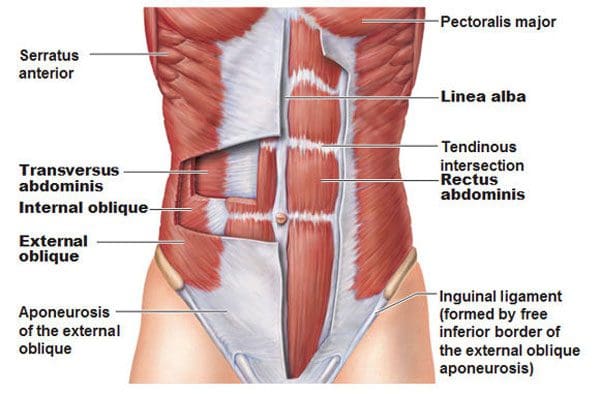
For example, individuals that do not have low back pain engage the transverse abdominus around 30 milliseconds before moving the shoulder, while individuals that have low back pain have a delayed contraction of the transverse abdominus muscles that makes them take on awkward postures and move in an awkward fashion contributing to back pain and continuing to weaken the core muscles. Individuals that regularly do transverse abdominus strengthening exercises greatly reduce the risk of experiencing low back pain for the first time and reduce the recurrence of those already with back pain. Â
Table of Contents
Core Muscle Anatomy
The first step to strengthening is understanding the moves and how to do them correctly with basic anatomy. Think of the core as a muscle box where the:
- The front is the abdominals
- The back is the spinal stabilizing muscles
- The base is the pelvic floor
- The top is the diaphragm
- The sides are the hip muscles
The core moves in three ways:
- The body flexes and extends whenever bending forward and standing up
- The body does a lateral side bend when bending the trunk to one side
- The body rotates the trunk when twisting the torso
Muscle Weakness
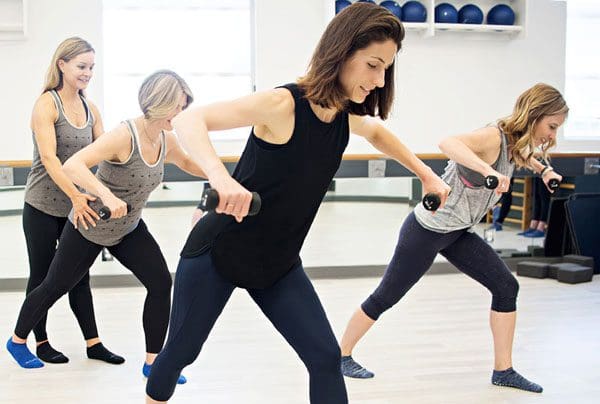
The transverse abdominus tends to suffer from neglect which is one reason why it becomes weakened. This increases the risk of developing back pain. Another reason is that individuals have weak muscles is they exercise in one plane of movement. Not working out the core muscles in all planes of motion can contribute to back pain. For example, if an individual performs pelvic tilts, they only move in one plane when tilting the hips forward and back, known as flexion and extension. To achieve optimal/functional strength, the core workout needs to include side bending and twisting movements. Â
Strengthening The Transverse Abdominus
Pigeon Pose
Many individuals sit for extended amounts of time and are excessively tight along the sides and hips. The first step should be to increase the hip’s mobility before strengthening the core. If the hip muscle’s fibers become shortened, it can affect hip joint function and efficiency during core movement. The Pigeon Pose is a hip opener. How to do it:
- Get on the floor with your knees and palms on the ground.
- Slide the left leg back, so the hip is extended, then externally rotate the right hip/turn the right leg out from the hip. Focus on positioning the right shin perpendicular to the body.
- Extend the trunk so the body is upright, lifting the chest, arching the back, and looking toward the ceiling while resting the fingertips on the floor a little forward of the hips.
- Hold the pose for 30 seconds and switch sides.
- This stretches the hip flexor muscles in the extended leg and the flexed leg’s rotator and outer hip muscles.
Pay Attention To The Engaged Muscles
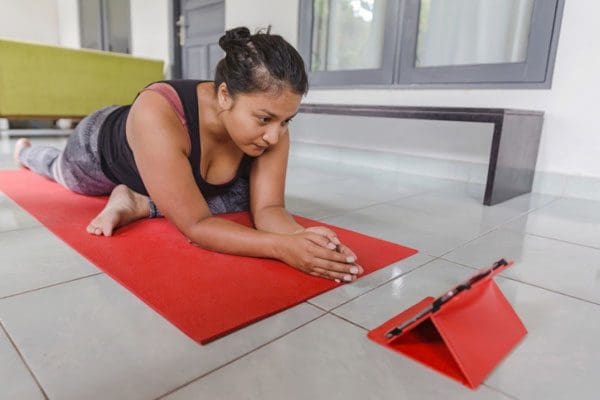
Individuals can train the transverse muscles to activate faster and more effectively throughout the day by slowing down and paying attention to moving with more intent. Place the hands around the waist and engage the core to feel the muscles contracting. This will help get a feel for the movement. Once comfortable, remember to engage these abdominal muscles before and while reaching, twisting, or lifting items. Â
Pelvic Tilt
This exercise is vital for building the smaller muscles that support a healthy core. How to do it:
- Lie on back with knees bent and feet on the floor.
- Engage the transverse muscles and gently tilt the pelvis upward.
- Return the pelvis to a neutral position.
- Repeat.
- Start with 3 sets of 10-12 reps.
When this is no longer challenging and can be completed without increasing back pain, advance to more challenging exercises like the bird dog, planks, or plank variations.

Standing Exercises
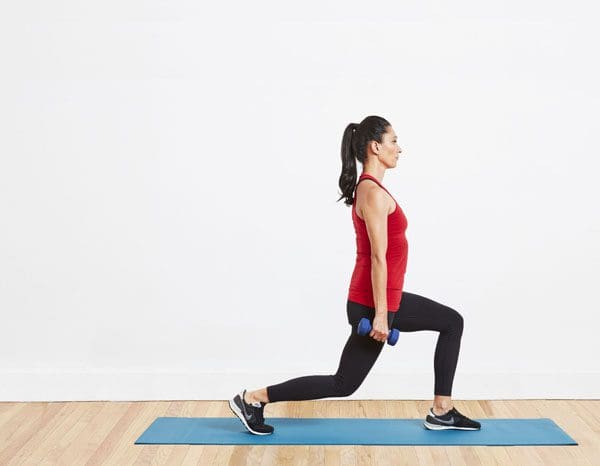
Translating core strength into functional strength and pain-free movement progresses to standing exercises that require rotation. One example is a standing lunge with rotation. How to do it:
- Get into a lunge stance with the front leg flexed 90 degrees at the hip, knee, and ankle. The rear leg should be extended at the hip with the knee touching or almost touching the floor.
- Twist from the waist. When comfortable doing this movement, hold weight like a dumbbell, medicine ball, or gallon jug of water in both hands, and gradually increase the weight as the muscles get stronger.
When in the process of strengthening the core, consistency is the key. Commit to a short workout every day instead of one massive workout once or twice a week. Ten minutes a day is enough to build strength, improve function, and decrease back pain. Â
Body Composition
Functional fitness and the ability to move about comfortably benefit physical wellness and improve body composition. The aging process reduces the metabolic rate, which leads to increased body fat. Lean Body Mass gets lost from age and inactivity. Lean Body Mass contributes to the overall Basal Metabolic Rate, also known as the body’s metabolism. It is the number of calories the body needs to support essential functions. Engaging in strength training or resistance exercises will help regain the muscle loss from aging/inactivity and lead to an increase in lean body mass.
References
People who regularly engaged in TVA-strengthening exercises were less likely to experience a recurrence of low back pain: Australian Journal of Physiotherapy (2002), “Specific spinal exercise substantially reduces the risk of low back pain recurrenceâ€Â https://www.sciencedirect.com/science/article/pii/S000495141460283X?via%3Dihub.



 Again, We Welcome You.
Comments are closed.