


Table of Contents
Functional Units in Musculoskeletal Health and Recovery
Abstract
Hello, I’m Dr. Alex Jimenez. With a comprehensive background spanning roles as a Doctor of Chiropractic (DC), Advanced Practice Registered Nurse (APRN), and Board-Certified Family Nurse Practitioner (FNP-BC), along with advanced certifications in functional medicine (CFMP, IFMCP), Applied Tensegrity Neurology (ATN), and Cranial Correction Structural Therapy (CCST), I am dedicated to exploring and implementing the most effective, evidence-based treatments for my patients. At Injury Medical Clinic PA, our mission is to provide care that is not only restorative but also transformative. Today, I want to share a revolutionary perspective on orthopedic health that goes beyond merely treating symptoms. We will explore the concept of the “functional unit”—a holistic approach that considers the entire biomechanical system to identify and address the root causes of pain and dysfunction. This educational post explores how we integrate interventional orthopedics, functional medicine principles, and specialized chiropractic care to create personalized, long-term solutions for conditions like osteoarthritis. We will discuss the latest research from leading experts, including groundbreaking studies on intraosseous injections and the critical role of subchondral bone, showcasing how a comprehensive treatment strategy can yield superior outcomes and help patients avoid more invasive procedures.
Our Integrative and Collaborative Practice
I am also proud to announce a significant enhancement to our practice. Dr. Maria Guadalupe Cardenas, MD, a highly respected physician with over 40 years of experience as a board-certified internist, has joined our team as the Medical Director and Collaborative Physician. Dr. Cardenas (NPI #1164426749, Texas MD License #J2933) brings a wealth of medical knowledge and diagnostic expertise that perfectly complements our integrative model.
This multidisciplinary partnership is foundational to our philosophy at Injury Medical Clinic PA. It allows us to merge the distinct strengths of different medical disciplines to provide a truly holistic and comprehensive patient experience. Here’s how our team works together:
- Medical Oversight (Dr. Cardenas, MD): Dr. Cardenas provides essential medical direction, overseeing diagnostic processes, managing complex medical conditions that may influence musculoskeletal health, and ensuring that all treatments are safe and medically appropriate. Her expertise in internal medicine allows us to understand the systemic factors—such as inflammation, metabolic health, and chronic disease—that often contribute to orthopedic problems.
- Integrative Chiropractic & Functional Neurology (Dr. Jimenez, DC, APRN, FNP-BC): My role is to analyze and correct biomechanical and neurological imbalances. Using advanced chiropractic techniques, functional neurology, and rehabilitation protocols, I focus on restoring proper structure and function. This includes spinal adjustments, soft tissue therapies, and targeted exercises designed to re-educate the neuromuscular system and improve the stability of the entire kinetic chain.
- Functional Medicine: Together, we utilize functional medicine principles to dig deeper into the root causes of a patient’s condition. This involves assessing lifestyle factors, nutritional status, and environmental influences to optimize the body’s innate healing capabilities.
- Comprehensive Services: Our clinic seamlessly integrates these disciplines with personal injury care, advanced rehabilitation, and other related services to offer a one-stop solution for patients seeking lasting recovery and peak performance.
This collaborative model ensures that every patient receives a well-rounded, evidence-based treatment plan tailored to their unique needs, combining the best of conventional medicine, chiropractic care, and functional health.
The “How” and “Why”: Interventional and Functional Orthopedics
When we approach patient care, we begin with two fundamental questions: “How” are we going to treat the condition, and “Why” are we choosing a specific approach?
How: The Interventional Orthopedics Approach
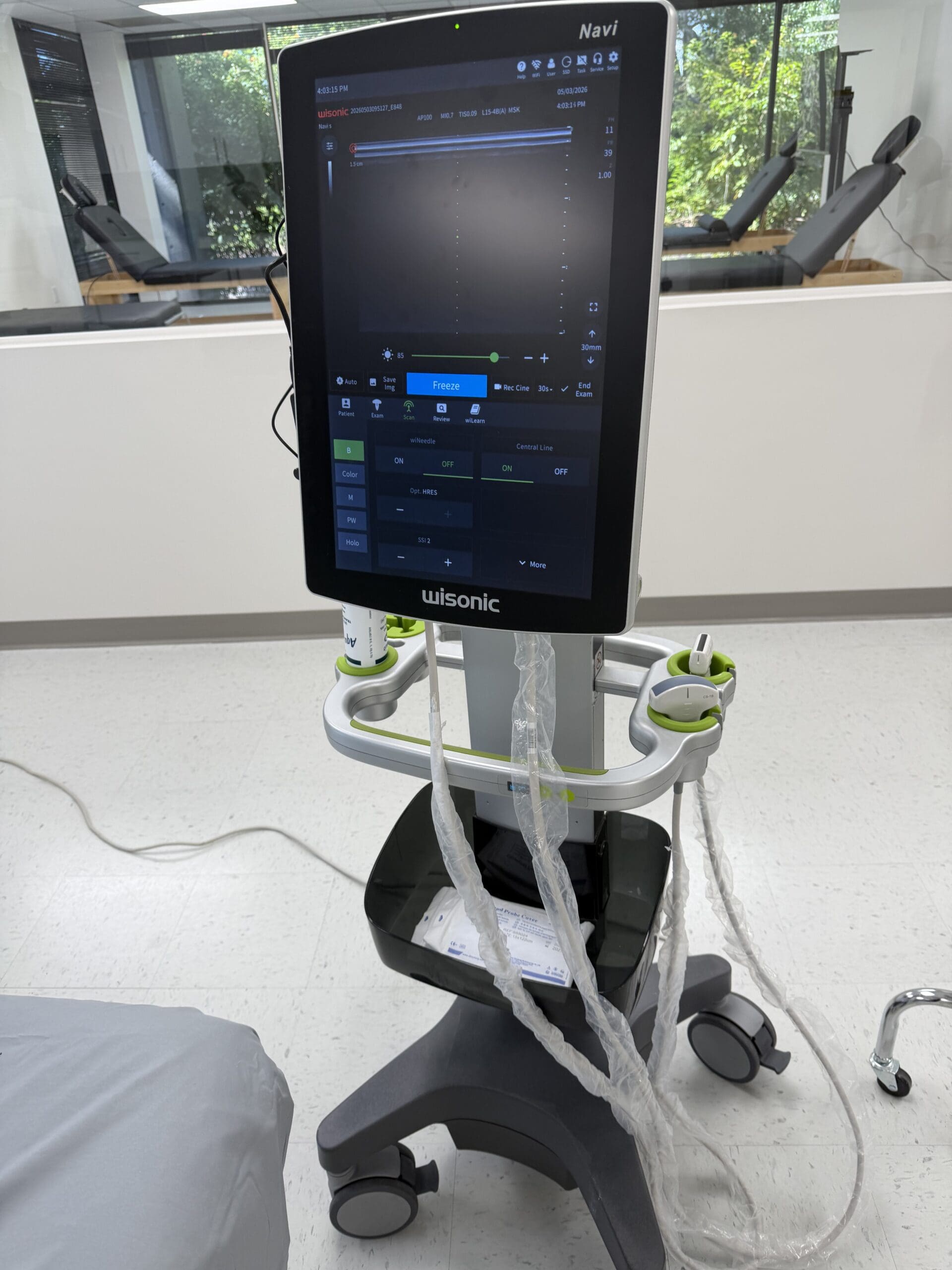
The “how” is rooted in interventional orthopedics. This isn’t just about managing pain; it’s about precisely targeting the source of the problem. Unlike a conventional pain management injection that might be administered blindly into a general area of discomfort, interventional orthopedics uses advanced imaging guidance, such as ultrasound and fluoroscopy, to deliver treatments with pinpoint accuracy. This allows us to target specific structures—be it a ligament, a tendon, a specific part of a joint capsule, or even the bone itself—based on a thorough diagnostic workup of the individual’s unique condition. We are not just treating “knee pain”; we are treating a specific tear in the meniscus, laxity in a particular ligament, or inflammation in the subchondral bone of that specific patient.
Why: The Functional Orthopedics and Functional Unit Approach
The “why” brings us to a concept I call functional orthopedics. While the term may be my own, the philosophy is built on time-tested principles. It is a synthesis of my background as an osteopathic-minded practitioner and my training in physical medicine and rehabilitation (PM&R). This philosophy is guided by several core tenets:
- The body is a complete, integrated unit.
- Structure and function are reciprocally interrelated.
- The body possesses powerful self-healing and self-regulating mechanisms.
- Rational treatment is based on understanding and applying these principles.
Functional orthopedics applies these tenets to modern musculoskeletal care. Drawing inspiration from the functional medicine model, we look beyond the immediate symptoms to identify and address the root causes of a condition. We consider all the factors that could be contributing to the patient’s problem—from biomechanical imbalances and nutritional deficiencies to systemic inflammation—to optimize their overall health and healing potential.
A central element of this approach is the concept of the “functional unit.” This idea, originally described in an old surgical textbook by Dudley and White in the context of the spine, posits that no single structure works in isolation. The “functional spinal unit,” for instance, includes not just the vertebrae and discs but also the ligaments, muscles, nerves, and fascia that support and control them. To treat a spinal issue effectively, one must consider the entire unit.
Expanding the Functional Unit: Beyond the Spine
This concept is not limited to the spine. We are now applying it to other joints with remarkable success. Recent research has validated this comprehensive approach for both the lumbar and cervical spine. Studies have shown that treating the entire functional unit—injecting orthobiologics such as Platelet-Rich Plasma (PRP) or Bone Marrow Aspirate Concentrate (BMAC) into the epidural space, facet joints, ligaments, and paraspinal muscles—yields more significant and longer-lasting benefits than treating a single structure in isolation.
The same principle holds true for other joints, like the knee. A pivotal study compared outcomes in patients with knee osteoarthritis who received either a standard intra-articular (inside the joint) injection or a comprehensive injection that treated both intra-articular and extra-articular structures. While both groups improved, the patients who received the comprehensive treatment reported significantly better and more durable outcomes.
Think about a patient with mild to moderate knee osteoarthritis. It’s rarely just about the cartilage. How often do we find concurrent pes anserine bursitis, hamstring tendinopathy, or tenderness along the collateral ligaments? The functional unit approach compels us to assess and, if necessary, treat all these contributing structures, not just the primary site of pain.
A Deeper Look: The Critical Role of Subchondral Bone
For years, the prevailing belief was that osteoarthritis was primarily a disease of cartilage. Patients often come to my clinic saying, “My doctor told me my cartilage is gone.” However, we now understand that cartilage loss does not always correlate with pain. The real game-changer in pain and dysfunction often occurs when the underlying bone, known as the subchondral bone, becomes affected.
The subchondral bone is not inert; it is a living, dynamic tissue with a rich blood supply and a reservoir of mesenchymal stem cells (pericytes) crucial for healing and tissue maintenance. Dr. Philippe Hernigou, a pioneering orthopedic surgeon from France, conducted seminal research comparing the concentration of these healing cells in the bone marrow of the iliac crest (PSIS) versus the subchondral bone of an osteoarthritic knee. His findings were striking: as osteoarthritis progresses and a person ages, the number of reparative cells in the subchondral bone of the knee declines dramatically, while the concentration in the iliac crest remains relatively stable.
This discovery has shifted the paradigm of osteoarthritis treatment. If the local healing environment within the bone is depleted, it makes sense to replenish it. This has led to the development of intraosseous injections—delivering orthobiologics like PRP and BMAC directly into the subchondral bone.
- Multiple studies and a recent meta-analysis have demonstrated the merit of intraosseous PRP for knee osteoarthritis, especially in more advanced cases. Our consensus statement for the American Academy of PM&R now recognizes intraosseous PRP as a valuable treatment option.
- Perhaps the most compelling data comes from a pair of sister studies on intraosseous BMAC for severe knee osteoarthritis. In one study, patients had one knee replaced and the other treated with intraosseous BMAC. After an average follow-up of 15 years, over 80% of patients had avoided a knee replacement in their BMAC-treated knee. Furthermore, they overwhelmingly preferred their “bone marrow knee” to their artificial one.
- The second study involved patients who did not want surgery. One knee received an intra-articular BMAC injection, while the other received an intraosseous BMAC injection. Both groups benefited, but the knees treated with the intraosseous injection had a significantly lower rate of conversion to total knee arthroplasty.
This evidence strongly suggests that for moderate-to-severe osteoarthritis, we must look beyond the joint space. A truly comprehensive approach addresses the intra-articular environment, the extra-articular soft tissues, and the subchondral bone. This is the essence of treating the whole functional unit.
The Clinical Detective Work: Putting It All Together
So, how do we determine what to treat? This is where we become clinical detectives. It requires a thorough physical examination, diagnostic ultrasound, and a deep understanding of biomechanics.
Let’s consider a patient with medial knee osteoarthritis, often associated with a varus deformity (bow-leggedness).
- Our treatment must address the compressed medial compartment, including the medial meniscus and the articular cartilage of the medial femoral condyle and tibial plateau.
- But we must also consider the structures under tension. In a varus knee, the lateral collateral ligament (LCL) is constantly being stretched and may become lax and dysfunctional. Treating the LCL is crucial for restoring stability.
- As a chiropractor, I also assess the entire kinetic chain. Does the varus alignment originate from foot mechanics, such as overpronation? Is there weakness in the hip abductors, like the gluteus medius, causing the femur to adduct and rotate internally? Addressing these upstream and downstream dysfunctions through chiropractic adjustments, orthotics, and targeted rehabilitation is essential for lasting results.
Conversely, a patient with a valgus deformity (knock-kneed) and lateral compartment osteoarthritis requires a different strategy. We would focus on the lateral structures under compression, but also treat the medial structures, such as the medial collateral ligament (MCL), that are stretched and weakened.
What about a condition like patellofemoral pain syndrome or maltracking, where the kneecap is pulled laterally? The conventional approach might be to strengthen the vastus medialis obliquus (VMO). A functional approach, however, involves identifying structures that fail to provide medial stability, such as the medial patellofemoral ligament (MPFL), and treating them directly to restore their integrity.
The Final Takeaway: Think Beyond the Joint
My final and most important message is to think beyond the immediate site of pain. If a patient presents with an atraumatic lateral meniscus tear or patellofemoral chondromalacia, does the story end at the knee? Or should we be investigating the entire functional kinetic chain?
- Look Distally: How are their foot and ankle mechanics? Is there a loss of the medial longitudinal arch? Is there weakness in the tibialis posterior or, as I often find, the extensor hallucis longus (EHL)? Weakness in the big toe extensor can be a subtle but powerful indicator of an L5 nerve root irritation.
- Look Proximally: What about the hip and core? As we know, weakness in the hip abductors and external rotators is a major contributor to knee valgus and subsequent knee problems. We must strength-test these muscles.
- Assess the Neurological Component: Is there a subclinical radiculopathy (nerve root irritation) contributing to muscle weakness and altered biomechanics? We must perform a thorough neurological exam, including strength testing, reflex testing, and assessing for dural tension.
By going back to our foundational training—in anatomy, physiology, neurology, and biomechanics—and combining it with cutting-edge orthobiologic treatments, we can achieve truly remarkable, long-term outcomes for our patients. We stop chasing pain and start correcting dysfunction. We don’t just find a “pain generator”; we identify the “treatment generator”—the key to restoring the health of the entire system.
Thank you.
References
- Centeno, C., et al. (2020). A prospective multi-site registry study of a specific protocol of autologous bone marrow concentrate for the treatment of shoulder rotator cuff tears and osteoarthritis. Journal of Pain Research, 13, 1-13. https://doi.org/10.2147/JPR.S226372
- Centeno, C., et al. (2018). The use of lumbar epidural injection of platelet lysate for treatment of radicular pain. Journal of Experimental Orthopaedics, 5(1), 38. https://doi.org/10.1186/s40634-018-0154-y
- Centeno, C. J., et al. (2008). The use of autologous bone marrow concentrate for the treatment of rotator cuff tears and osteoarthritis of the shoulder. Physical Medicine and Rehabilitation Clinics of North America, 19(1), 113-129. https://doi.org/10.1016/j.pmr.2007.10.006
- Darrow, M., et al. (2019). Treatment of knee osteoarthritis with prolotherapy: A retrospective case series. Clinical Medicine Insights: Arthritis and Musculoskeletal Disorders, 12. https://doi.org/10.1177/1179544119842612
- Hernigou, P., et al. (2021). Subchondral bone and osteoarthritis: A biological and clinical review. International Orthopaedics, 45(7), 1711–1719. https://doi.org/10.1007/s00264-021-05041-3
- Sánchez, M., et al. (2016). Intraosseous infiltration of platelet-rich plasma for the treatment of knee osteoarthritis. Arthroscopy Techniques, 5(5), e1191–e1196. https://doi.org/10.1016/j.eats.2016.07.001



 Again, We Welcome You.
Comments are closed.