


Table of Contents
Front Hip and Front Thigh Pain: Which Muscles Are Usually Responsible and What Helps
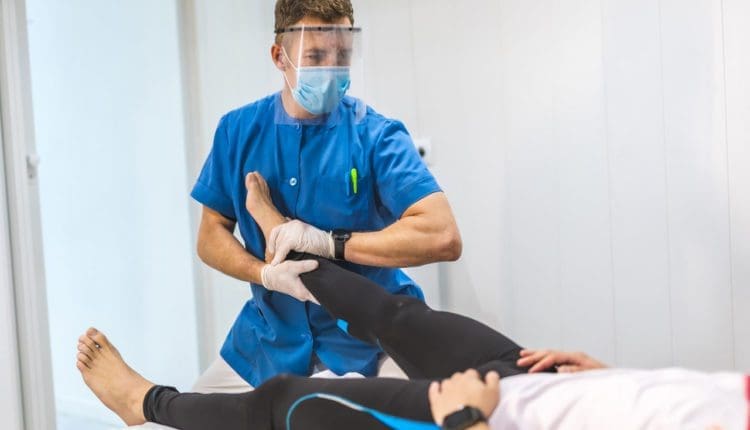
Pain in the front of your hip or the front of your thigh can feel confusing because many important structures live in a small area. The good news is that the body often gives clues. The “front hip and front leg” region is primarily powered by muscles that flex the hip (knee lift) and extend the knee (knee straightening). These muscles help you walk, jog, climb stairs, and stand up from a chair. When they get overworked, tight, or weak in the wrong places, they can become sore, irritated, or injured.
This article explains:
-
The main muscles that create front hip/front thigh pain
-
How to tell muscle pain from joint pain or nerve pain
-
Why sitting and repetitive motion commonly trigger symptoms
-
What an integrative chiropractic plan often includes (adjustments + soft tissue + strengthening)
-
When you should get checked quickly
The main muscle groups that can cause pain in the front hip or front thigh
The hip flexors (the “knee lifters”)
Hip flexors are the muscles that bring your knee toward your chest and help you take a step. A common reference point is the crease at the front of your hip.
The five “key” hip flexor muscles commonly listed include:
-
Iliacus
-
Psoas major
-
Pectineus
-
Rectus femoris
-
Sartorius
A major player is the iliopsoas (iliacus + psoas). It is located deep in the front of the hip and is strongly associated with hip flexor strain, iliopsoas tendon irritation, and iliopsoas bursitis.
The anterior thigh muscles (the “knee straighteners”)
The front thigh is called the anterior compartment of the thigh. Its primary job is knee extension (straightening the knee). It is mainly powered by the femoral nerve (L2–L4).
Key muscles include:
-
Quadriceps femoris (a four-muscle group):
-
Rectus femoris (special because it also flexes the hip)
-
Vastus medialis
-
Vastus lateralis
-
Vastus intermedius
-
-
Sartorius
-
Pectineus
-
(And the iliopsoas passes through this region as it heads toward the femur)
“Helper” tissues that can mimic muscle pain
Front hip pain is not always just a muscle problem. The same area also includes:
-
The hip joint (ball-and-socket surfaces)
-
The labrum (cartilage ring around the socket)
-
The joint capsule
-
Bursae (fluid-filled cushions that reduce friction)
-
Major nerves and vessels (like the femoral nerve)
That’s why two people can point to almost the same spot, but have different root causes.
What these muscles do during walking, jogging, and standing up from a chair
Think of daily movement as teamwork:
-
Walking/jogging
-
Hip flexors help swing the leg forward during the step.
-
Quads help control the knee and support landing.
-
Pelvic stability depends on balanced hip strength and timing.
-
-
Standing up from a chair
-
Quads straighten the knees.
-
Hip muscles coordinate to bring the trunk upright.
-
Tight hip flexors can pull the pelvis forward and change mechanics.
-
-
Going up stairs
-
Hip flexion + knee extension work together.
-
The rectus femoris (a quadriceps muscle) is heavily involved because it crosses both the hip and the knee.
-
When any part of this system is overloaded, the body may “borrow” motion from adjacent joints (e.g., the lower back), thereby perpetuating the problem.
Why the front hip and front thigh often get tight or painful
The big everyday drivers
Front hip pain is commonly associated with patterns such as prolonged sitting, repetitive hip flexion, and training errors.
Common triggers include:
-
Sitting for long periods (desk work, driving)
-
Running volume increases too fast
-
Lots of kicking or sprinting
-
Deep squats with poor hip control
-
Weak glutes/core causing the hip flexors or quads to “do too much.”
The “tight hip flexor” effect (why sitting matters)
One well-described issue is that prolonged sitting can shorten/tighten the hip flexors, contribute to anterior pelvic tilt, and alter hip and low back loading.
That doesn’t mean sitting is “bad,” but it does mean your body may need movement breaks and strength balance to stay comfortable.
Which specific muscles usually hurt in the front hip/front thigh (and how they feel)
Here’s a practical way to think about the most common muscle-related culprits.
Iliopsoas (deep hip flexor)
Often feels like:
-
A deep ache at the front of the hip or groin area
-
Pain when lifting the knee, climbing stairs, or running uphill
-
Sometimes, a “snap” or “click” sensation (snapping hip patterns can involve iliopsoas tendon motion)
Rectus femoris (quad + hip flexor)
Often feels like:
-
Pain in the front of the hip and front of the thigh
-
Worse with sprinting, kicking, or explosive movements
-
Tenderness in the mid-thigh or near the front hip crease
Sartorius (long strap-like muscle)
Often feels like:
-
Achy discomfort from the front hip toward the inner knee
-
Worse with combined hip flexion + rotation movements
Pectineus (front/inner hip)
Often feels like:
-
Pain where the front of the hip meets the inner thigh
-
Discomfort with hip flexion and bringing the leg inward (adduction)
Quadriceps group (vastus muscles)
Often feels like:
-
Front thigh soreness, tightness, or burning during/after activity
-
Front knee discomfort (because the quads influence the kneecap mechanics)
When it’s not “just a muscle”: other common causes of anterior hip pain
Front hip pain can come from muscle/tendon, joint, bone, nerve, or referred pain sources.
Common non-muscle sources
-
Hip joint problems (like osteoarthritis, femoroacetabular impingement, labral issues)
-
Labral tears (often felt as groin pain, clicking/catching; imaging like MR arthrography may be used when indicated)
-
Stress fracture risk (especially with repetitive impact and pain that worsens with activity)
-
Nerve involvement (front/outer thigh symptoms like burning, tingling, or numbness—this is a different pattern than a simple strain)
-
Referred pain from the low back (the hip and back can “share” symptoms)
A key point: where you feel pain matters, but it’s not enough by itself. A thorough examination assesses the range of motion, strength, symptom triggers, and the full history.
A quick pattern guide: what your symptoms often suggest
Use this as a general guide (not a diagnosis):
-
Pain mainly when you lift the knee (marching, stairs): hip flexor load (often iliopsoas/rectus femoris)
-
Pain with knee straightening under load (running, getting up): quad dominance/overload (often rectus femoris + vastus group)
-
Deep groin ache + catching/clicking: consider joint/labrum patterns
-
Pain that worsens after prolonged sitting, then eases as you move: stiffness patterns (can be muscle- or joint-related)
-
Burning/tingling/numbness (especially outer thigh): consider nerve irritation patterns
How integrative chiropractic care often approaches chronic front hip/front thigh pain
An integrative plan usually aims to answer two questions:
-
What tissue is irritated right now? (muscle, tendon, joint, nerve, or bone)
-
Why is it being overloaded? (posture, movement habits, strength imbalance, training errors)
In an integrative setting, clinicians commonly combine:
-
Joint assessment and manual care (hip, pelvis, lumbar spine)
-
Soft tissue therapy (to reduce guarding and improve tolerance to movement)
-
Progressive strengthening and motor control work (so the pain doesn’t keep coming back)
Where chiropractic adjustments may fit (carefully and realistically)
A chiropractic adjustment does not “repair” a torn tendon by itself. But improving motion in the spine/pelvis/hip region can sometimes help reduce protective tension and improve movement options—especially when paired with rehab.
Some modern clinical guidelines for hip conditions support the use of manual therapy in combination with exercise for certain individuals (e.g., the 2025 hip osteoarthritis physical therapy guideline discusses manual therapy options alongside exercise).
At the same time, other major guidelines (such as the 2019 ACR/Arthritis Foundation guideline) are more cautious about manual therapy, adding no additional benefit over exercise alone for hip/knee osteoarthritis.
Practical takeaway: Manual therapy can be a helpful tool for some people, but long-term improvement usually depends on strength, capacity, and movement habits.
Clinical observations in a dual-scope model
In clinical writing shared by Dr. Alexander Jimenez, an important theme is combining:
-
a detailed exam,
-
attention to “referred pain” possibilities,
-
and appropriate imaging pathways when red flags or persistent symptoms suggest underlying joint or bone pathology (for example, X-ray views first in some cases, and MRI/MR arthrography when needed to clarify diagnoses such as occult fracture or labral pathology).
That “don’t guess—test” mindset matters with anterior hip pain, because the front hip region has many overlapping possibilities.
Exercises and movement strategies that often help (general ideas)
If your clinician confirms the problem is muscle/tendon overuse (not a fracture, major joint injury, or nerve issue), these are common categories used in rehab.
Mobility (gentle, not aggressive)
-
Hip flexor stretching (done calmly—no sharp pain)
-
Hip extension work to counter long-sitting positions
-
Light, soft tissue work for tolerance (not “digging” through pain)
Strength and balance (build support around the hip)
Focus on sharing the workload so the hip flexors/quads don’t overcarry everything:
-
Glute bridge/hip thrust patterns
-
Step-ups or controlled sit-to-stand practice
-
Side-lying hip abduction work (glute med support)
-
Core bracing drills that reduce pelvic “dumping”
For runners and active people: “load management” basics
-
Reduce volume temporarily (but don’t always go to zero)
-
Avoid sudden jumps in hills/sprints
-
Rebuild gradually with better form and strength capacity
When to get a medical evaluation sooner (don’t wait)
Get checked promptly if you have:
-
Inability to bear weight
-
Fever, unexplained swelling/redness
-
Severe pain after a fall or trauma
-
Night pain that’s getting worse
-
New numbness, weakness, or symptoms traveling with burning/tingling
-
Pain that persists or worsens despite basic rest and activity changes (especially if stress fracture risk is possible)
Key takeaways
-
Front hip/front thigh pain most commonly involves hip flexors (iliopsoas, rectus femoris, sartorius, pectineus) and/or the quadriceps group.
-
Sitting and repetitive motion can tighten hip flexors and alter pelvic position, thereby overloading the anterior hip system.
-
Not all anterior hip pain is muscular; joint, bone, nerve, and referred pain sources are common and should be screened.
-
Integrative care often works best when it blends manual therapy, targeted strengthening, and movement habit changes, and uses imaging/testing when the story doesn’t fit a simple strain.
References
-
Anatomy, Bony Pelvis and Lower Limb: Anterior Thigh Muscles (StatPearls/NCBI Bookshelf)
-
Hip pain – Anterior hip pain (Musculoskeletal Matters, NHS Dorset)
-
The Definitive Guide to Understanding Anterior Hip Pain Causes (Evolve Physical Therapy)
-
Hip Pain in Adults: Evaluation and Differential Diagnosis (AAFP)
-
Differential Diagnosis of Anterior Hip Pain – Joint (Dr Alison Grimaldi)
-
Hip Pain and Mobility Deficits—Hip Osteoarthritis (2025 CPG PDF)
-
2019 ACR/Arthritis Foundation Guideline for Osteoarthritis (PMC full text)
-
Why Your Hip Hurts (What Each Pain Location Means) (YouTube)
-
Muscles of the Thigh and Gluteal Region – Anatomy Tutorial (YouTube)
Post Disclaimer
Professional Scope of Practice *
The information herein on "Front Hip and Front Thigh Pain Diagnosis and Treatment" is not intended to replace a one-on-one relationship with a qualified health care professional or licensed physician and is not medical advice. We encourage you to make healthcare decisions based on your research and partnership with a qualified healthcare professional.
Blog Information & Scope Discussions
Welcome to El Paso's Premier Wellness, Personal Injury Care Clinic & Wellness Blog, where Dr. Alex Jimenez, DC, FNP-C, a Multi-State board-certified Family Practice Nurse Practitioner (FNP-BC) and Chiropractor (DC), presents insights on how our multidisciplinary team is dedicated to holistic healing and personalized care. Our practice aligns with evidence-based treatment protocols inspired by integrative medicine principles, similar to those on this site and our family practice-based chiromed.com site, and focuses on restoring health naturally for patients of all ages.
Our areas of multidisciplinary practice include Wellness & Nutrition, Chronic Pain, Personal Injury, Auto Accident Care, Work Injuries, Back Injury, Low Back Pain, Neck Pain, Migraine Headaches, Sports Injuries, Severe Sciatica, Scoliosis, Complex Herniated Discs, Fibromyalgia, Chronic Pain, Complex Injuries, Stress Management, Functional Medicine Treatments, and in-scope care protocols.
Our information scope is multidisciplinary, focusing on musculoskeletal and physical medicine, wellness, contributing etiological viscerosomatic disturbances within clinical presentations, associated somato-visceral reflex clinical dynamics, subluxation complexes, sensitive health issues, and functional medicine articles, topics, and discussions.
We provide and present clinical collaboration with specialists from various disciplines. Each specialist is governed by their professional scope of practice and their jurisdiction of licensure. We use functional health & wellness protocols to treat and support care for musculoskeletal injuries or disorders.
Our videos, posts, topics, and insights address clinical matters and issues that are directly or indirectly related to our clinical scope of practice.
Our office has made a reasonable effort to provide supportive citations and has identified relevant research studies that support our posts. We provide copies of supporting research studies upon request to regulatory boards and the public.
We understand that we cover matters that require an additional explanation of how they may assist in a particular care plan or treatment protocol; therefore, to discuss the subject matter above further, please feel free to ask Dr. Alex Jimenez, DC, APRN, FNP-BC, or contact us at 915-850-0900.
We are here to help you and your family.
Blessings
Dr. Alex Jimenez DC, MSACP, APRN, FNP-BC*, CCST, IFMCP, CFMP, ATN
email: [email protected]
Multidisciplinary Licensing & Board Certifications:
Licensed as a Doctor of Chiropractic (DC) in Texas & New Mexico*
Texas DC License #: TX5807, Verified: TX5807
New Mexico DC License #: NM-DC2182, Verified: NM-DC2182
Multi-State Advanced Practice Registered Nurse (APRN*) in Texas & Multi-States
Multi-state Compact APRN License by Endorsement (42 States)
Texas APRN License #: 1191402, Verified: 1191402 *
Florida APRN License #: 11043890, Verified: APRN11043890 *
Colorado License #: C-APN.0105610-C-NP, Verified: C-APN.0105610-C-NP
New York License #: N25929, Verified N25929
License Verification Link: Nursys License Verifier
* Prescriptive Authority Authorized
ANCC FNP-BC: Board Certified Nurse Practitioner*
Compact Status: Multi-State License: Authorized to Practice in 40 States*
Graduate with Honors: ICHS: MSN-FNP (Family Nurse Practitioner Program)
Degree Granted. Master's in Family Practice MSN Diploma (Cum Laude)
Dr. Alex Jimenez, DC, APRN, FNP-BC*, CFMP, IFMCP, ATN, CCST
My Digital Business Card
Licenses and Board Certifications:
DC: Doctor of Chiropractic
APRNP: Advanced Practice Registered Nurse
FNP-BC: Family Practice Specialization (Multi-State Board Certified)
RN: Registered Nurse (Multi-State Compact License)
CFMP: Certified Functional Medicine Provider
MSN-FNP: Master of Science in Family Practice Medicine
MSACP: Master of Science in Advanced Clinical Practice
IFMCP: Institute of Functional Medicine
CCST: Certified Chiropractic Spinal Trauma
ATN: Advanced Translational Neutrogenomics
Memberships & Associations:
TCA: Texas Chiropractic Association: Member ID: 104311
AANP: American Association of Nurse Practitioners: Member ID: 2198960
ANA: American Nurse Association: Member ID: 06458222 (District TX01)
TNA: Texas Nurse Association: Member ID: 06458222
NPI: 1205907805
| Primary Taxonomy | Selected Taxonomy | State | License Number |
|---|---|---|---|
| No | 111N00000X - Chiropractor | NM | DC2182 |
| Yes | 111N00000X - Chiropractor | TX | DC5807 |
| Yes | 363LF0000X - Nurse Practitioner - Family | TX | 1191402 |
| Yes | 363LF0000X - Nurse Practitioner - Family | FL | 11043890 |
| Yes | 363LF0000X - Nurse Practitioner - Family | CO | C-APN.0105610-C-NP |
| Yes | 363LF0000X - Nurse Practitioner - Family | NY | N25929 |
Dr. Alex Jimenez, DC, APRN, FNP-BC*, CFMP, IFMCP, ATN, CCST
My Digital Business Card



 Again, We Welcome You.
Comments are closed.