
Table of Contents
Squats and Core Training for Lower Back and Hip Pain: A Biomechanical, Evidence-Based Chiropractic Science Perspective
Lower back and hip pain are among the most common movement-related complaints seen in clinical and chiropractic settings. From an evidence-based and biomechanical perspective, these issues rarely come from a single injured structure. Instead, they develop from movement dysfunction, muscle imbalance, poor load distribution, and reduced spinal stability.
Research and clinical observation consistently show that properly performed squats and targeted core exercises can reduce pain, restore movement efficiency, and improve long-term outcomes—when they are prescribed correctly and integrated with professional care.
This article explains how squats and core training influence spinal mechanics, why poor technique causes pain, and how an integrative chiropractic and nurse practitioner model—aligned with chiropractic science—supports both short- and long-term recovery.
Understanding the Biomechanics of Lower Back and Hip Pain
Lower back and hip pain are closely linked through shared muscles, joints, and nerve pathways. When one area fails to move or stabilize properly, another area compensates.
Common contributing factors include:
-
Weak deep core stabilizers
-
Limited hip mobility
-
Overactive lumbar muscles
-
Poor postural control
-
Faulty movement patterns during daily tasks
Biomechanically, the lumbar spine is designed for stability, while the hips are designed for mobility. When the hips lose mobility, the lower back is forced to move more than it should, leading to strain and irritation (Squat University, 2017; Natural Care Center, n.d.).
Why Squats Are a Foundational Human Movement

Squats are not just a gym exercise—they are a fundamental movement pattern. Sitting, standing, lifting, and even walking rely on the same joint coordination used in squatting.
From a chiropractic science standpoint, squats:
-
Train coordinated hip–spine movement
-
Reinforce proper load transfer through the pelvis
-
Strengthen the posterior chain (glutes, hamstrings)
-
Reduce excessive lumbar motion
When performed correctly, squats reduce shear forces on the lumbar spine by allowing the hips to absorb force (HSS, n.d.; Redefine Your Pain, n.d.).
How Improper Squats Contribute to Pain
Pain during squatting does not automatically mean squats are harmful. It usually signals movement dysfunction.
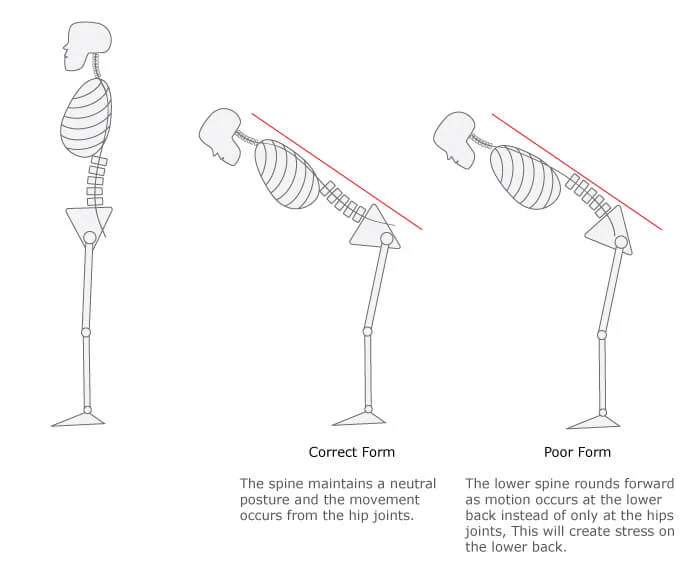
Common biomechanical errors include:
-
Loss of neutral spine
-
Excessive forward trunk lean
-
Poor core engagement
-
Limited ankle or hip mobility
-
Overreliance on the lower back
These faults increase compressive and shear forces on the lumbar spine and can irritate discs, joints, or surrounding soft tissue (Carter PT, n.d.; Movement Solutions, n.d.).
The Core: The Spine’s Stabilization System
The core is best understood as a stability system, not just visible abdominal muscles.
It includes:
-
Transverse abdominis
-
Multifidus
-
Pelvic floor
-
Diaphragm
Together, these muscles create internal spinal support during movement.
Why Core Stability Matters
Evidence shows that core stabilization exercises (CSE) improve spinal control and reduce nonspecific low back pain by improving neuromuscular coordination rather than brute strength (PMC, 2022).
Core training helps:
-
Control spinal motion
-
Reduce micro-instability
-
Improve load tolerance
-
Support efficient movement
Why Squats and Core Training Must Work Together
Squats without core control overload the spine. Core exercises without functional movement fail to transfer into daily life.
When combined, they:
-
Maintain neutral spinal alignment
-
Allow the hips to generate force
-
Reduce stress on lumbar discs and joints
-
Improve movement confidence
This integrated approach reflects the joint-by-joint model, where stability and mobility alternate throughout the body (Squat University, 2018).
Hip Tightness, Glute Weakness, and Lumbar Compensation
Tight hip flexors and weak glutes are strongly linked to lower back pain.
When the hips cannot extend or rotate properly:
-
The lumbar spine compensates
-
Muscles fatigue quickly
-
Pain develops with repetition
Corrective squats and hip-focused core exercises restore proper sequencing, allowing the spine to stabilize while the hips move (Cary Ortho, n.d.).
Squats, Core Training, and Mild Sciatica
Mild sciatica symptoms are often mechanical rather than purely neurological.
Core and hip strengthening can help by:
-
Improving pelvic alignment
-
Reducing nerve irritation from instability
-
Decreasing muscle tension around the sciatic nerve
Research and clinical evidence show improved outcomes when strengthening is paired with manual care and movement correction (Pecan Country Chiropractic, n.d.).
When Exercise Is Not Enough
Exercise alone is not always sufficient, especially when pain persists or worsens.
Red flags that require professional evaluation include:
-
Numbness or tingling
-
Progressive weakness
-
Pain radiating below the knee
-
Balance problems
-
Loss of bladder or bowel control
These symptoms may indicate nerve compression, disc pathology, or joint dysfunction, all of which may require further assessment (Hinge Health, n.d.).
Chiropractic Science and Integrative Care
From a chiropractic science perspective, movement correction is most effective when paired with:
-
Joint mobility restoration
-
Neuromuscular re-education
-
Spinal alignment optimization
-
Functional exercise progression
Chiropractic adjustments can restore joint motion, while targeted exercises reinforce new movement patterns.
Integrating Nurse Practitioner Oversight
The inclusion of a nurse practitioner adds medical depth by:
-
Screening for neurological or systemic causes
-
Ordering imaging or labs when needed
-
Managing inflammation or pain safely
-
Coordinating long-term recovery strategies
This dual-scope model aligns with current integrative pain management research (Duke Health, n.d.).
Clinical Observations from Dr. Alexander Jimenez
According to clinical observations from Dr. Alexander Jimenez, DC, APRN, FNP-BC, patients with chronic lower back and hip pain often demonstrate:
-
Poor hip–spine dissociation
-
Weak deep core stabilizers
-
Compensatory movement under load
-
Recurring flare-ups without corrective care
Dr. Jimenez notes that combining biomechanically sound exercise with spinal care and medical oversight produces more durable outcomes than exercise or adjustments alone (Jimenez, n.d.).
Short-Term vs Long-Term Outcomes
Short-Term Improvements
-
Reduced pain and stiffness
-
Improved movement confidence
-
Better posture awareness
Long-Term Benefits
-
Improved spinal stability
-
Reduced recurrence of injury
-
Enhanced performance and mobility
-
Better load tolerance in daily life
This aligns with evidence showing integrative approaches outperform isolated interventions (West Texas Chiropractic, n.d.).
Starting Safely: Professional Guidance Matters
Before beginning or progressing an exercise program, especially after injury, individuals should consult:
-
Chiropractors
-
Nurse practitioners
-
Physical therapists
-
Qualified movement professionals
Proper screening ensures exercises are appropriate and safe (Harvard Health, 2011).
Key Evidence-Based Takeaways
-
Squats train functional hip–spine coordination
-
Core stability protects the lumbar spine
-
Pain during exercise signals dysfunction, not failure
-
Technique and progression matter
-
Integrative chiropractic care improves outcomes
References
Healthline. (2020). Lower back pain when squatting. https://www.healthline.com/health/back-pain/lower-back-pain-when-squatting
Redefine Your Pain. (n.d.). Does squatting help or hurt lower back pain? https://redefineyourpain.com/does-squatting-help-or-hurt-lower-back-pain/
Carter Physical Therapy. (n.d.). Lower back pain when squatting. https://carterpt.com/blog/lower-back-pain-when-squatting
Hospital for Special Surgery. (n.d.). Back pain after squats. https://www.hss.edu/health-library/move-better/back-pain-after-squats
Harvard Health Publishing. (2011). Strengthening your core the right way. https://www.health.harvard.edu/blog/strengthening-your-core-right-and-wrong-ways-to-do-lunges-squats-and-planks-201106292810
PMC. (2022). Core stabilization exercises for low back pain. https://pmc.ncbi.nlm.nih.gov/articles/PMC9340836/
Squat University. (2017). Common squat injuries and low back pain. https://squatuniversity.com/2017/01/26/common-squat-injuries-low-back-pain-pt-5-the-joint-by-joint-approach/
Squat University. (2018). Core training: bridging rehab to performance. https://squatuniversity.com/2018/11/01/core-training-bridging-rehab-to-performance/
Duke Health. (n.d.). Improving pain management through integrative care. https://physicians.dukehealth.org/articles/improving-pain-management-through-integrative-care-options
Jimenez, A. (n.d.). Clinical insights. https://dralexjimenez.com/
Post Disclaimer
Professional Scope of Practice *
The information herein on "Biomechanical Evidence-Based Chiropractic Perspective on Pain" is not intended to replace a one-on-one relationship with a qualified health care professional or licensed physician and is not medical advice. We encourage you to make healthcare decisions based on your research and partnership with a qualified healthcare professional.
Blog Information & Scope Discussions
Welcome to El Paso's Premier Wellness, Personal Injury Care Clinic & Wellness Blog, where Dr. Alex Jimenez, DC, FNP-C, a Multi-State board-certified Family Practice Nurse Practitioner (FNP-BC) and Chiropractor (DC), presents insights on how our multidisciplinary team is dedicated to holistic healing and personalized care. Our practice aligns with evidence-based treatment protocols inspired by integrative medicine principles, similar to those on this site and our family practice-based chiromed.com site, and focuses on restoring health naturally for patients of all ages.
Our areas of multidisciplinary practice include Wellness & Nutrition, Chronic Pain, Personal Injury, Auto Accident Care, Work Injuries, Back Injury, Low Back Pain, Neck Pain, Migraine Headaches, Sports Injuries, Severe Sciatica, Scoliosis, Complex Herniated Discs, Fibromyalgia, Chronic Pain, Complex Injuries, Stress Management, Functional Medicine Treatments, and in-scope care protocols.
Our information scope is multidisciplinary, focusing on musculoskeletal and physical medicine, wellness, contributing etiological viscerosomatic disturbances within clinical presentations, associated somato-visceral reflex clinical dynamics, subluxation complexes, sensitive health issues, and functional medicine articles, topics, and discussions.
We provide and present clinical collaboration with specialists from various disciplines. Each specialist is governed by their professional scope of practice and their jurisdiction of licensure. We use functional health & wellness protocols to treat and support care for musculoskeletal injuries or disorders.
Our videos, posts, topics, and insights address clinical matters and issues that are directly or indirectly related to our clinical scope of practice.
Our office has made a reasonable effort to provide supportive citations and has identified relevant research studies that support our posts. We provide copies of supporting research studies upon request to regulatory boards and the public.
We understand that we cover matters that require an additional explanation of how they may assist in a particular care plan or treatment protocol; therefore, to discuss the subject matter above further, please feel free to ask Dr. Alex Jimenez, DC, APRN, FNP-BC, or contact us at 915-850-0900.
We are here to help you and your family.
Blessings
Dr. Alex Jimenez DC, MSACP, APRN, FNP-BC*, CCST, IFMCP, CFMP, ATN
email: [email protected]
Multidisciplinary Licensing & Board Certifications:
Licensed as a Doctor of Chiropractic (DC) in Texas & New Mexico*
Texas DC License #: TX5807, Verified: TX5807
New Mexico DC License #: NM-DC2182, Verified: NM-DC2182
Multi-State Advanced Practice Registered Nurse (APRN*) in Texas & Multi-States
Multi-state Compact APRN License by Endorsement (42 States)
Texas APRN License #: 1191402, Verified: 1191402 *
Florida APRN License #: 11043890, Verified: APRN11043890 *
Colorado License #: C-APN.0105610-C-NP, Verified: C-APN.0105610-C-NP
New York License #: N25929, Verified N25929
License Verification Link: Nursys License Verifier
* Prescriptive Authority Authorized
ANCC FNP-BC: Board Certified Nurse Practitioner*
Compact Status: Multi-State License: Authorized to Practice in 40 States*
Graduate with Honors: ICHS: MSN-FNP (Family Nurse Practitioner Program)
Degree Granted. Master's in Family Practice MSN Diploma (Cum Laude)
Dr. Alex Jimenez, DC, APRN, FNP-BC*, CFMP, IFMCP, ATN, CCST
My Digital Business Card
Licenses and Board Certifications:
DC: Doctor of Chiropractic
APRNP: Advanced Practice Registered Nurse
FNP-BC: Family Practice Specialization (Multi-State Board Certified)
RN: Registered Nurse (Multi-State Compact License)
CFMP: Certified Functional Medicine Provider
MSN-FNP: Master of Science in Family Practice Medicine
MSACP: Master of Science in Advanced Clinical Practice
IFMCP: Institute of Functional Medicine
CCST: Certified Chiropractic Spinal Trauma
ATN: Advanced Translational Neutrogenomics
Memberships & Associations:
TCA: Texas Chiropractic Association: Member ID: 104311
AANP: American Association of Nurse Practitioners: Member ID: 2198960
ANA: American Nurse Association: Member ID: 06458222 (District TX01)
TNA: Texas Nurse Association: Member ID: 06458222
NPI: 1205907805
| Primary Taxonomy | Selected Taxonomy | State | License Number |
|---|---|---|---|
| No | 111N00000X - Chiropractor | NM | DC2182 |
| Yes | 111N00000X - Chiropractor | TX | DC5807 |
| Yes | 363LF0000X - Nurse Practitioner - Family | TX | 1191402 |
| Yes | 363LF0000X - Nurse Practitioner - Family | FL | 11043890 |
| Yes | 363LF0000X - Nurse Practitioner - Family | CO | C-APN.0105610-C-NP |
| Yes | 363LF0000X - Nurse Practitioner - Family | NY | N25929 |
Dr. Alex Jimenez, DC, APRN, FNP-BC*, CFMP, IFMCP, ATN, CCST
My Digital Business Card


 Again, We Welcome You.
Comments are closed.